

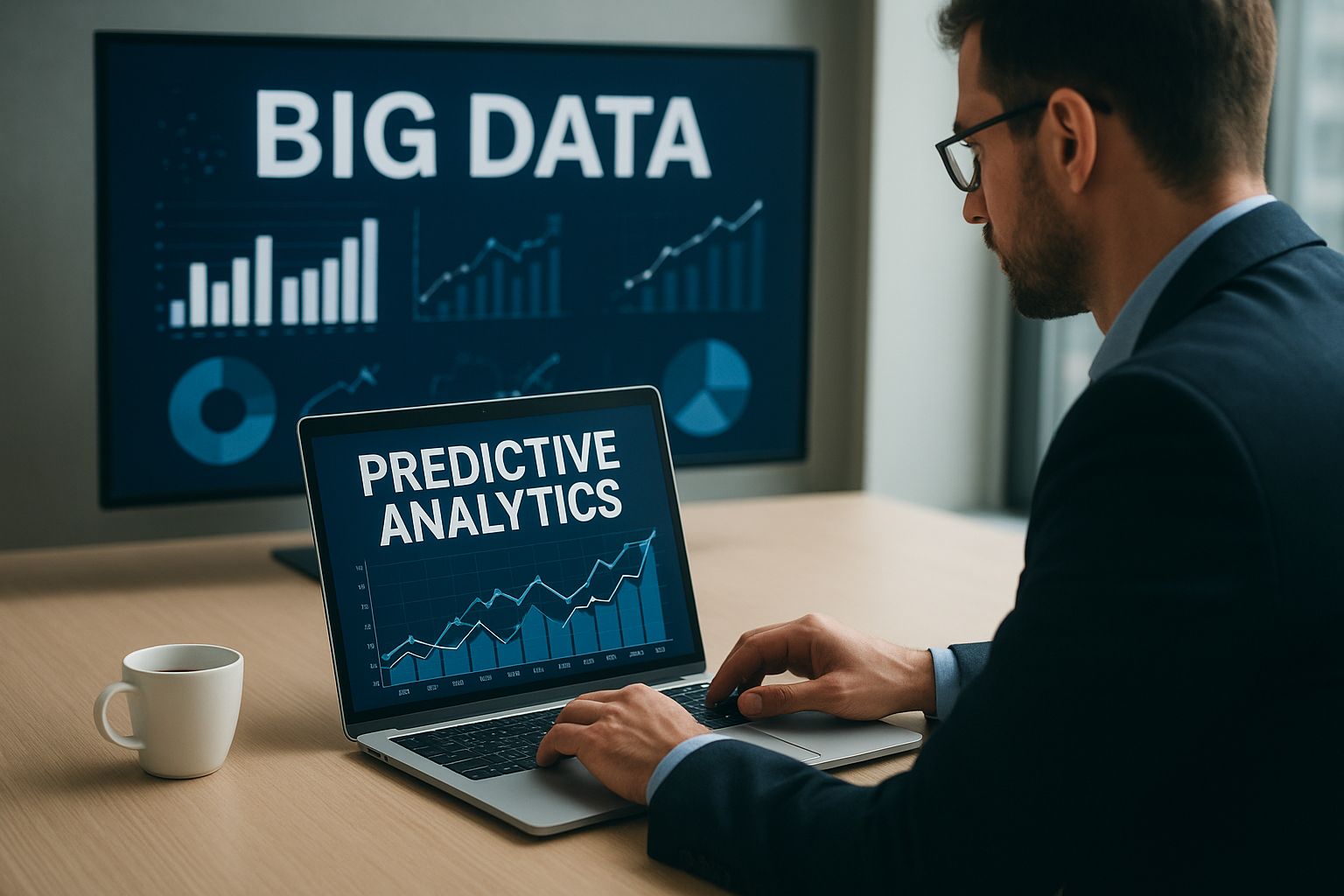
In the contemporary business landscape, the utilization of big data has become a cornerstone for strategic decision-making and competitive advantage. As companies endeavor to harness vast amounts of information to drive enterprise growth, predictive analytics emerges as a pivotal trend, transforming data into actionable forecasts.
Predictive analytics involves the use of data, statistical algorithms, and machine learning techniques to identify the likelihood of future outcomes based on historical data. This application is shifting from being merely a futuristic concept to a present-day reality, fundamentally altering how organizations approach data strategy and market positioning.
Industries across the board are embracing this trend. In retail, for instance, companies are leveraging predictive models to anticipate consumer buying behaviors, optimize inventory management, and personalize customer experiences. This approach not only enhances sales efficiency but also nurtures customer loyalty by delivering tailored services.
The healthcare sector illustrates another profound impact of predictive analytics on business strategy. Through analyzing patient data, healthcare providers can predict disease outbreaks, tailor treatment plans, and manage patient care more proactively. This proactive approach optimizes operational efficiency and patient outcomes, paving the way for a more sustainable healthcare system.
Financial services are also at the forefront of this trend. By employing predictive analytics, banks and financial institutions enhance risk management, fraud detection, and decision-making processes. The predictive models assist in evaluating credit risks, detecting anomalies in transaction patterns, and even assessing market conditions to mitigate financial exposure.
However, the transition to an analytics-driven strategy is not without challenges. Organizations need to navigate data privacy concerns, ensuring compliance with regulations such as GDPR and CCPA. The ethical implications of predictive models, particularly in sensitive sectors like insurance and finance, require careful scrutiny to avoid biases and ensure fairness.
In addition, the demand for skilled analytics professionals is paramount. Companies must invest in training and developing talent capable of interpreting complex data sets and converting them into strategic assets. The collaboration between data scientists, IT teams, and business strategists thereby becomes crucial for maximizing the impact of predictive analytics.
As more organizations recognize the potential of predictive analytics, investing in robust data infrastructure and fostering a culture that embraces data-driven decision-making will be critical. The ability to anticipate market shifts, understand consumer patterns, and optimize operational processes can significantly enhance a company’s ability to innovate and thrive in a competitive market.
The rise of predictive analytics within the sphere of big data represents not just a technological trend but a transformative shift in business strategy. Companies that adeptly integrate predictive insights into their strategic frameworks are likely to set themselves apart, leading their industries into a data-driven future.

